

Many Christians speak a sort of insider lingo, and this group argot is sometimes called Christianese. Catchphrases like a hedge of protection, quiet time, or loving on someone abound, and we often don’t take the time to consider what they might mean, or if they’re even biblical.
For example, the ubiquitous use of the phrase broken to describe universal human sinfulness: We are all broken. This makes it sound as if we are the victims of an accident, like a vase that got dropped, instead of creatures with agency who are accountable to divine justice for the decisions we make.
Biblically-speaking, broken is not the phrase used to describe universal human depravity. That word is sin, as in: All have sinned and fall short of the glory of God (Romans 3:23). Wicked, unjust, unrighteous, ungodly, depraved, and reprobate are also appropriate biblical terms. When the Bible calls people broken, it means one of two things: They are in despair, as in Job 17:1: My spirit is broken; or, They are mourning their sins and turning to God in repentance, as in Psalm 51:17: a broken and contrite heart, O God, you will not despise.
Christianese can also put a pious-sounding gloss on sinful, selfish, and even sinister motivations in the speaker’s heart. How often does, I don’t feel led; actually mean: I really don’t want to, and I’m not interested in exploring why? Likewise, how often does, I feel led, actually mean: I really want to do this, but if it goes sideways I have the inscrutable ways of God to blame? And then, how often does: Can I tell you something in love; actually mean: I am about to absolutely tear you a new one?
Christianese, like the sanitized language of the HR department, is a deeply-coded jargon. And that’s a problem, when our Lord taught us: Let what you say be simply “Yes” or “No”; anything more than this comes from evil (Matthew 5:37). But many of us have fallen into the Orwellian trap of pretentious diction and meaningless words. When there is a gap between one’s real and one’s declared aims, Orwell said, we turn instinctively to exhausted idioms, like a cuttlefish squirting out ink. Where jargon has gone completely septic, Orwell warned that it is designed to make lies sound like truth and murder respectable, and to give an appearance of solidity to pure wind. Christianese has not yet devolved (at least I don’t think it has) to the point that it makes murder respectable. But it is often worn as a benign mask obscuring a cruel grin full of venomous fangs.
So there are many reasons why the Christianese we often speak is unhelpful—even destructive—and unbiblical. At best, it tends to lead us to speak without thinking. But Scripture warns us: If anyone thinks he is religious and does not bridle his tongue but deceives his heart, this person’s religion is worthless (James 1:26).
Proverbs 15:14 declares: The heart of him who has understanding seeks knowledge, but the mouths of fools feed on folly. But Christianese often stifles the search for godly knowledge and wisdom, trading it for the folly of a thoughtless cliche.
Likewise, Scripture warns of the insincere person who is inwardly calculating … but his heart is not with you (Proverbs 23:7). Just to the extent that Christianese may be used to obscure everything from truly base intentions to social clumsiness, it leads us into insincerity.
Another real danger with many Christianese catchphrases is that the portray God falsely. This is actually a very serious issue, because it falls under the category of a Third Commandment Violation. All false speech about God is a form of taking His Name in vain.
One of the Christianese phrases we often hear that grates against the doctrine of God as He is given to us in Scripture is: Wow! God really showed up!
Now, there is a way I suspect this phrase was initially used that is not objectionable. I suspect it was probably meant to describe situations where God answers prayers in a surprising or improbable manner; or protects us from hidden harm or evil. I believe that God really showed up was originally meant to describe awe at recognizing a powerful manifestation of His Providence. In this regard, the speaker means something like: God really came through for me. Supporting my supposition that this is the origin of the phrase God showed up, is that and showed out is often added for emphasis. In other words, they’re acknowledging that something extraordinary has happened—so extraordinary that the only logical explanation is an act of God.
But this is not how the phrase is often used. Typically, you hear it after a particularly emotional or moving time of worship: Wow! God really showed up in church today! Basically, God showed up, is used to mean: I felt something. Now, someone might object that this is an uncharitable downgrade of what they experienced. To you, I ask for some patience while I explain my concern, in the spirit of James 1:19: let every person be quick to hear, slow to speak, slow to anger. My concerns are not only theological, but pastoral.
When God showed up is used to describe the emotional response evoked by a time of worship, in practice it ends up undermining the omnipresence of God. That is, God is equally present in all places. In Jeremiah 23:24, God declares: Do I not fill heaven and earth? In Acts 17:27, St. Paul preaches that God is not far from each one of us. The Psalmist exclaims: Where shall I go from your Spirit? Or where shall I flee from your presence? If I ascend to heaven, you are there! If I make my bed in Sheol, you are there! If I take the wings of the morning and dwell in the uttermost parts of the sea, even there your hand shall lead me, and your right hand shall hold me (Psalm 139:7-10). You see, God is not only present in all places, but seeing, knowing, and working. So Proverbs 15:3 teaches us: The eyes of the Lord are in every place, keeping watch on the evil and the good.
Now, just here I often encounter the objection: But what about when Jacob had the vision of the ladder between heaven and earth? He said: Surely the Lord is in this place, and I did not know it (Genesis 28:16).
But couple of really important clarifications are in order here. First, we are dealing with a Theophany, that is, a visible, tangible manifestation of the Lord’s presence. Second, this is from a narrative, and narratives are often descriptive, rather than prescriptive. What an ancient Patriarch stammered after encountering a visible manifestation of God’s presence is not on par with God’s own description of His being, nor with the teachings of the Prophets and Apostles, for establishing doctrine.
Others might point to the Lord’s special presence in the Tabernacle and later the Temple. But consider these words of Solomon, when he dedicated the Temple: But will God indeed dwell on the earth? Behold, heaven and the highest heaven cannot contain you; how much less this house that I have built! (1 Kings 8:27) Solomon, while acknowledging God’s promise to dwell with His people in a more immediate manner in the Temple, was also wise enough to discern, in the same breath, that God is omnipresent. He doesn’t just “show up” places randomly—He fills heaven and earth at all times. He is always everywhere—no more, no less.
Now, these are incredibly necessary and useful distinctions to make. Because what we’re actually dealing with is an omnipresent but hidden God who chooses when, where, how, and under what conditions He will reveal Himself to us: Truly, you are a God who hides himself (Isaiah 45:15).
Sometimes—like with Jacob’s vision of the ladder—God’s appearance is ad hoc, that is, for a specific purpose. These we ought not count on. God has never promised that He will “show up” in these sorts of ways for us.
But much more frequently, God “shows up” for His people in a more immediate way—like He did in the Old Testament Temple. And these places God has sealed with a promise that He will be there if you seek Him there—and this next qualification is super important—whether we sense Him there or not.
Most immediately, God reveals Himself in Christ, the Second Person of the Trinity, the Eternally-Begotten Son Incarnate. Scripture says that He is the image of the invisible God; the radiance of the glory of God and the exact imprint of his nature (Colossians 1:15; Hebrews 1:3). And Christ promises His Church: I am with you always, to the end of the age (Matthew 28:20). He is Immanuel, which means God-With-Us (Matthew 1:23). And He dwells in every believer by His Holy Spirit: the Spirit of him who raised Jesus from the dead dwells in you (Romans 8:11). He likewise dwells among the Church collectively by the same Holy Spirit: in [Christ] the whole structure, being joined together, grows into a holy temple in the Lord. In him you also are being built together into a dwelling place for God by the Spirit (Ephesians 2:21-22). This is always true whether we perceive it to be or not, because God has promised it is. That whether we perceive it or not is absolutely essential to the Christian life, because this is where faith believes what we don’t always see: Now faith is the assurance of things hoped for, the conviction of things not seen (Hebrews 11:1).
There are other ways the hidden God has promised to be with His people in a more immediate manner. One is our baptism, where He has cleansed [us] by the washing of water with the word (Ephesians 5:26). The word there is the promise of God that He will cleanse our consciences by assuring us that we are forgiven (1 Peter 3:21; Hebrews 9:11-13). Again, we receive this by faith. It’s not a fuzzy feeling in the heart, or a buzz in the atmosphere. Faith believes that God is present and true to His promise, even when there is no warm fuzzy or buzz in the room, and God feels very far away.
He is with us in the Lord’s Supper: Whoever feeds on my flesh and drinks my blood, Jesus says, abides in me, and I in him (John 6:56). Christ communes with us, and we with Him; He nourishes our faith, He excites our hope, He renews our love in the bread and wine. The cup of blessing which we bless, is it not the communion of the blood of Christ? The bread which we break, is it not the communion of the body of Christ? (1 Corinthians 10:16 KJV) Our Lord communes with us even on Sundays when we don’t “feel” it. Or do His promises depend on our will and effort?
God is present with us in an immediate way when we read the Holy Scriptures, because all Scripture is breathed out by God (2 Timothy 3:16). His words minister to our spirits even when we don’t realize it. He is also intimately present with us in our prayers, by His Holy Spirit: Likewise the Spirit helps us in our weakness. For we do not know what to pray for as we ought, but the Spirit himself intercedes for us with groanings too deep for words. And he who searches hearts knows what is the mind of the Spirit, because the Spirit intercedes for the saints according to the will of God (Romans 8:26-27). When we don’t know what to pray, the Third Person of the Triune God gives us words; and when all we can manage is a groan, the Spirit translates all that is contained in that groan into intelligible petitions to the Father.
And again—all of this is still true, whether it feels like God “showed up” or not.
This applies to the collective worship of the Church, as well. Psalm 22:3 says that God is enthroned on the praises of His people. What else is a Temple, yea verily, the Holiest of Holies, but God’s throne room? If God is enthroned on our praises, then He has promised that whenever His people worship Him in faith, then He actually dwells with us in an immediate way—within the Temple of our praises.
Again, this is true because God is true, not because we felt some kind of way. Even if they sang a song you hated (mine is: I gave My life for thee, what hast thou given Me?); and the preacher was dry; and the Scripture reader stumbled through a genealogy; and the communion crackers were stale; and the guy who led the closing prayer sounded like Gomer Pyle. God doesn’t “show up” any less on normal, boring Lord’s Days, than He does on exciting ones.
The personal presence of the Lord is not predicated on our performance or perception, but on His promise.
So am I just being pedantic when I counsel us to police our God really showed up today talk? Perhaps. However, theology is one place where it pays to be pedantic. We can never be too careful how we speak of God, because our language shapes our thoughts about Him. And not only our own, but those of new Christians and of course, our children. Everyone is a theologian, because everyone has ideas about God. A major determining factor in whether we will be faithful theologians or failing ones is the care with which we speak of Him. We want to honor Him by guarding His attributes and works in our hearts and on our lips.
That being said, my concern is also pastoral— because theology is always practical. What we say and believe about God is always going to form how we live before Him.
When people say, after a worship service, Wow, God really showed up today!; what they really mean is, I felt something. Now, this “feeling something” really only parses out a couple of ways.
First: I shared a highly emotive, even transcendent, experience with others. Second: I / we was / were affected in a peculiar way.
Now, here’s why we need to be extremely careful. I want to present you with the case of Bart Campolo. Bart is the son of popular evangelist Tony Campolo. I first encountered Bart when he was speaking at the Christian Community Development Association convention in Cincinnati, OH in 2009. Two years later, Bart came out as an atheist. What’s interesting is how Bart describes his conversion to Christianity during a time of worship. It was one of those experiences that might make people say: Wow, God really showed up!
Bart tells the story this way:
There’s hundreds of kids there. It’s Saturday night, there’s candlelight and firelight and everybody’s singing “Our God is an Awesome God,” and “We Love You Lord.” And in the midst of that kind of environment I had what I guess you would call a transcendent moment … I felt something. It felt like there was something happening in that room that was bigger than the group. I felt like I was connecting to something. And in that moment … that was God.
I heard something. It was real to me. People that don’t believe in transcendent experiences—I always think like, “You haven’t been to the right concert … You haven’t used the right drugs. You haven’t fallen in love with the right partner.”
Premier Christian Radio, “Why Bart Lost His Faith, Why Sean Kept His.”
These experiences are real, and I think whatever narrative you’re in when you have one, it confirms that narrative. If I would have had that same transcendent moment with my friends in a mosque in Afghanistan, it would have confirmed Islam to me. But I was in the Christian world, so from that point on, Jesus was real to me.
Do you see what happened? For young Bart, the thrill of the experience was the true presence of God. He put his faith in the transcendent experience. But once he figured out that there are other ways to have the same kind of transcendent experience—to evoke those same emotions, stir those same desires, manufacture that same sense of being connected to That-Which-Is-Greater, Bart realized it was never actually Jesus he believed in, but the transcendent feelings.
Was it really God who “showed up” to Bart Campolo that Saturday night? Allow me to frame my response as another series of questions. Why do we use mood lighting, or campfires under the stars so pervasively in events geared for impressionable, hormonal teens? How come you never hear of flashy revivals breaking out on cold, gloomy days with soft-spoken preachers? If God is who we believe Him to be, why does He seem to rely on gimmicks, changes of scenery, a certain tempo of worship music, or super dynamic preachers to help Him “show up”? Does He need our help?
Too often, I have heard others proclaim that God really showed up today!; when what really happened is the preacher showed out and the worship band showed off in a manufactured worship event.
But God’s presence is not predicated on our performance or perception.
The tragic tale of Bart Campolo’s apostasy is but one example of deconversion stories I’ve been hearing consistently for two decades now. It’s closely related to what R. Scott Clark has dubbed the QIRE (rhymes with choir): the Quest for Illegitimate Religious Experience. By and large, churches and parachurch ministries have been trying to manufacture and manipulate religious happenings where God really showed up today! The consequence is that too many have been pointed to the experience, instead of the Christ.
But God has never promised to meet us in the experience. He has promised to meet us in Christ, and in the ordinary means of the Scriptures, baptism, the Lord’s Supper, prayer, and the regular gathering of the saints. Now, it requires faith to hear God speaking to you through the ordinary voice of your regular preacher; or to see Him in the manger and on the cross. Often what you realize people mean when they say: Wow! God really showed up today!; is that they have learned to seek Him “by sight,” not by faith. Like a junkie chasing the exhilaration of the first high, these religious experience junkies believe God “showed up” when they experience the transcendental buzz that harkens back to a candle lit Saturday evening when they sang “I Could Sing of Your Love Forever” until their voices gave out.
That probably wasn’t God. It was probably just a dopamine hit.
Now, remember there’s a second—and I believe much more innocent, but still misguided—thing people mean when they say: God really showed up; and that is, they found themselves affected in a peculiar way. What’s interesting about this is that it can happen any given Sunday, during a normal sermon or while singing a familiar song—even during a time of personal prayer or Bible reading.
And suddenly—unbidden—we are moved to tears by God’s love; or convicted of some sin or shortcoming; or overwhelmed by some insight about God. This is not the QIRE I mentioned above. This is true communion, but with the veil suddenly lifted. We often find it in the ordinary, when we were not seeking it. And like Jacob, we stammer: Surely the Lord is in this place, and I did not know it! Or, in Christianese, God really showed up!
Let me tell you a story that will give you some insight into what’s actually happening in these moments. It involves Mr. Rogers.
Now, Fred Rogers was a Presbyterian minister, so it’s no wonder that his TV show had a sort of liturgy. What I mean is, it was predictable and formulaic. You knew every time he was going to come in, and sing, “It’s a Beautiful Day in the Neighborhood,” while changing from a suit jacket and dress shoes into a cozy cardigan and sneakers. He would say hello, bring up a subject; and then either a neighbor would drop by; or he’d go visit somewhere; or show you a video about the topic he’d raised. Then you’d go with the Neighborhood Trolley to the Neighborhood of Make-Believe, where ideas were imaginatively explored and problems worked through. At some point, Mr. Rogers would feed the fish. And every episode would end with the same benediction: It’s such a good feeling to know you’re alive …
It was as ordinary and predictable as a Sunday at one of those “boring” churches.
Now, for almost a quarter of a century, François Clemmons portrayed the Neighborhood police officer, Officer Clemmons, on Mr. Rogers Neighborhood.
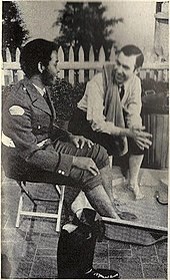
And behind the scenes, Rogers and Clemmons enjoyed a warm relationship, with Clemmons looking up to Fred as a sort of surrogate father.
After being on the show for several years, one day François Clemmons was watching Mr. Rogers end the show the way he always did. Hanging up his cardigan, he would say: “You make every day a special day just by being you, and I like you just the way you are.” But that day, Clemmons could feel Mr. Rogers looking at him when he said it.
So he asked him: “Fred, were you talking to me?”
To which Mr. Rogers answered: “I have been talking to you for years. Today, you heard me.”
This is sometimes what has actually happened to someone who says: God really showed up today! God has steadfastly been there the whole time. He has been there in the preached Word, creating faith in their hearts. He was there embracing them in the waters of baptism, declaring them His beloved child for the sake of Christ. He has dwelled in them faithfully by His Holy Spirit. Christ has been quietly feeding them Himself in the bread and wine of the Lord’s Supper. The Triune God has sat enthroned among the ordinary worship of their boring church. He has listened attentively to their prayers—even the ones that were little more than sighs in the night. He has breathed into them as they stole a few minutes with the Scriptures.
He has been there all along. But today, you noticed. Today, you heard Him.
Isn’t that beautiful?
Now, the other lesson is the problem of Christianese. Why can’t we just be plain-spoken, like our Lord commanded us?
Let’s stop saying we’re going to love on so-and-so. It’s innocent most of the time. But it sounds like the tactic of love-bombing often used by narcissistic and abusive personalities to manipulate others. They often begin by showering you with gifts and compliments. Why can’t we just say: Sister Janet needs some intentional expressions of love, she’s having a difficult time after Brother Frank passed away. Let’s find some tangible ways to show her we’re here for her, while being sensitive to not overwhelm her. Or, We need to be more kind and welcoming to new people who are visiting our church. It takes a little more effort than just saying, Let’s love on them; but it also helps put some flesh on that word love.
Or instead of saying: I don’t feel led; simply say: Sorry, I am already overcommitted; or, No, I am not interested. Now, if you feel guilty that you’re not interested, you need to explore that. Is this genuine conviction, or just my trouble with people-pleasing and setting boundaries? But, I don’t feel led is often a means people use not to deal with the discomfort of such discerning. The problem is, you’re using God as your escape hatch instead of saying No, and having to own it.
And instead of saying: Wow! God really showed up today; why not simply acknowledge: God’s always here, but today I heard Him. Today, I noticed. And lean into that! Because that may be the first step into noticing God more in the places He has promised to meet you, in your ordinary life, among your ordinary church of ordinary saints.
 the sermonator