
Lines 31 – 33 of the Athanasian Creed focused on the twoness of Christ, that is, His two natures, as true God and true Man. Lines 34 – 37 focus on the oneness of Christ. That is, how these two natures are joined in the one Person of Jesus.
In previous installments, we have gone through a line, or a few lines, of the Creed in a post. After introducing what is at stake in the portion we are considering, we have seen the lesson from the Creed, and then exposited each line from Scripture. But this section of the Creed demands greater depth. So this post will only cover the introductory material—understanding why these lines are necessary. We will proceed to reading the lesson from the Creed, and explaining it with Scripture, in another post.
It’s essential for Christians to properly define the twoness and the oneness of Christ. When we think wrongly about Christ, there are serious consequences for our worship and our conception of the Christian life. The Athanasian Creed guards against many heresies concerning the Person of Christ—and this, in turn, guards our worship and our works. Here are the false teachings the Creed protects us from.
Jesus is not God. This is seen in the ancient heresy of Ebionism that broke out among Jewish Christian communities in the Second Century. The Ebionites believed that Jesus was not God, but simply a great prophet. They confessed Jesus as the Son of God, but believed that He was adopted by God at His baptism. This ancient heresy is still alive and well among liberal and progressive Christian groups today. They confess Jesus as a great man and moral example, but deny that He is God. The problem with any form of Ebionism is that Jesus is no longer Immanuel, or God-with-us (Matthew 1:23; cf. Isaiah 7:14).
A similar heresy that you’ll often see trotted out even in supposedly conservative Christian churches is kenoticism. Kenotic Christology is rooted in a misreading of Philippians 2:6-7: who, although He existed in the form of God, did not regard equality with God a thing to be grasped, but emptied Himself [Greek, kenoó], taking the form of a bond-servant, and being made in the likeness of men (Philippians 2:6-7 NASB1995). The kenotic heresy holds that Christ emptied Himself of His divine attributes—like omniscience and omnipotence—in the Incarnation. The problem with this is that if Jesus laid aside any divine attributes, then He ceased to be God. God can’t turn His attributes on and off at will, but is eternally unchanging (Malachi 3:6; James 1:17). By him—that is, by Christ the Son—all things hold together (Colossians 1:17 CSB). If Christ had given up any of His divine attributes in the Incarnation, rather than saving the world, creation would have fallen apart and been destroyed. The correct understanding of Philippians 2:6-7 isn’t that the Son laid aside His divinity; but that, according to His humanity, He made Himself of no reputation, taking the form of a bondservant (NKJV). His self-emptying is seen as He, for instance, dresses as a slave and washes the feet of His disciples. Now, this is all the more poignant when we understand that because of the inseparable oneness of Christ, it might be truly said that the Almighty God washed the dirty feet of sinful creatures, in the human body of Christ.

Jesus is only God. This is seen in the ancient heresies of Docetism and Monophysitism.
Docetism was already a problem in the first century Church. John warned of it in his letters: Every spirit that confesses that Jesus Christ has come in the flesh is of God, and every spirit that does not confess that Jesus Christ has come in the flesh is not of God. And this is the spirit of the Antichrist, which you have heard was coming, and is now already in the world (1 John 4:2-3 NKJV). For many deceivers have gone out into the world who do not confess Jesus Christ as coming in the flesh. This is a deceiver and an antichrist (1 John 1:7 NKJV). The Docetists believed that the material world was evil—including, and especially, human bodies. They rejected the idea that God would have anything to do with something as icky as a body of flesh and blood, which sweated and relieved its bowels, and needed food and rest and whatnot. They taught that Jesus was only divine, and that He only appeared to have a human body.

Monophysitism—also known as Eutychianism—is a slightly more complicated heresy. In Monophysitism, the human nature of Christ was essentially absorbed into the divine nature at the moment of His conception (Monophysitism means “one nature”). While not as brazen as the earlier docetic heresy, which made Christ’s humanity a mere illusion; Monophysitism still presents us with grave problems. For example, what about passages that portray Jesus as sleeping (e.g., Matthew 8:24)? God does not sleep (Psalm 121:3-4). Was Jesus then simply pretending to be asleep?
Even more alarming, at the core of the Gospel is the claim that Christ died for our sins (1 Corinthians 15:3). But again, God—as God—cannot die. So did Jesus only pretend to die? If so, our sins have not been atoned for.
Any way of expressing the divinity of Christ at the expense of His humanity destroys the Gospel. We shall take this assertion up again shortly.
Jesus is part-God, part-human. This sums up the heresies of Apollinarianism, Nestorianism, Monothelitism. While Ebionism and Kenoticism deny Christ’s divine nature; and Docetism and Monophysitism deny His human nature; these three heresies mix the two natures into some new third thing that’s neither quite God or quite Man—like yellow and blue making green.
Monothelitism is the trickiest of the three. It was basically a way of trying to redeem Monophysitism, by changing “one nature” into “one will.” The idea was this: In Christ you do have a true union of the divine and human natures, so that He can truly be called God and Man. However—He lacked a truly human will. He had the divine will animating a human body. Like a meat puppet zapped to life. FrankenChrist.
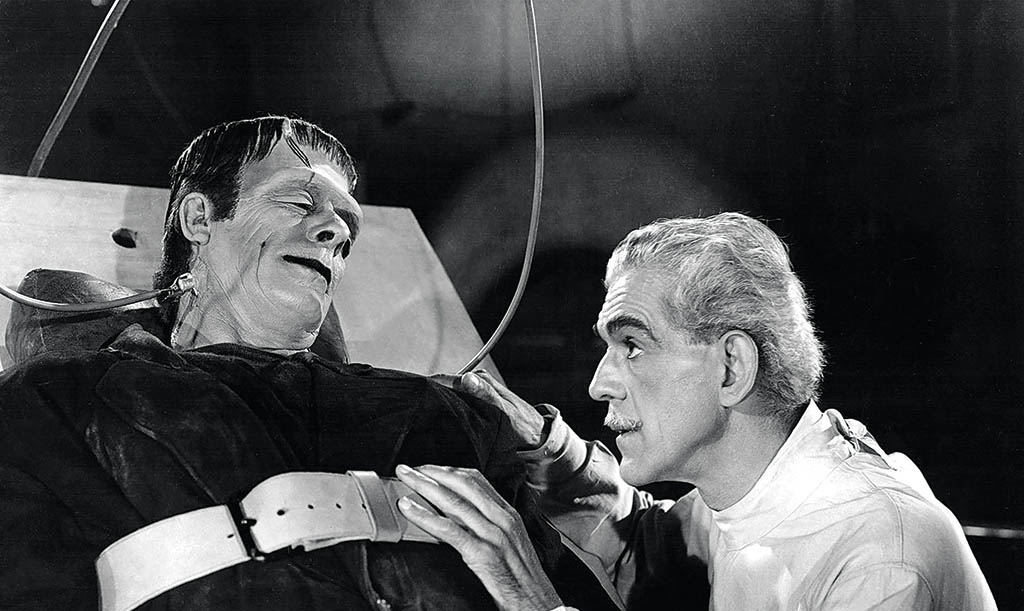
Closely related is Apollinarianism. According to this idea, in Jesus, the human intellect was replaced by the divine Logos. In other words, the mind of God dwelling in a human body.

Finally, we have Nestorianism. On this view, the human Christ is two persons—one divine, one human. They cooperate in a sort of moral rather than being joined in hypostatic union. That is, instead of two natures, each retaining their integrity, perfectly joined in the one Person of Jesus Christ; Nestorianism holds that you have two persons—one divine and one human—who are in contact with one another, but not united.
Nestorianism primarily objected to ideas like calling Mary Theotokos—“the Mother of God.” How could God—who is Spirit (John 4:24), and therefore, immaterial—be born from a physical womb of a physical woman? Thus they refused to call her Theotokos, but Christotokos—“the Mother of Christ.” That is, Mary was only the bearer of Christ the man—not of God the Second Person of the Trinity.
Likewise, again, when Jesus hungered, when Jesus grew weary—should we say that God became hungry and tired?
Essentially, what you find in Nestorianism is an attempt to over-rationalize the Incarnation.
The antidote to Nestorianism is in Acts 20:28, when St. Paul warns the elders of the churches of Ephesus: Therefore take heed to yourselves and to all the flock, among which the Holy Spirit has made you overseers, to shepherd the church of God which He purchased with His own blood (NKJV). Did you notice that? God purchased the Church with His own blood. Does God have blood? No—God as God does not have blood. But in the Person of Christ, according to His humanity, God shed His blood.
Look at it this way. In the Person of Jesus Christ dwells all the fullness of the Godhead bodily (Colossians 2:9 NKJV); yet we must understand that the properties of each nature retain their integrity. For example, when the Word [Logos] became flesh and dwelt among us (John 1:14 NKJV); the Logos — the Second Person of the Trinity — remained omnipresent; but of course, His human body was not omnipresent. And yet, the fullness of divinity has been perfectly united to true humanity in the Person of Jesus Christ. In other words, even in the Incarnation the Son continues a divine life beyond His body. Again, as we saw earlier—even during His earthly ministry, He continued, as God, upholding all things by the word of His power (Hebrews 1:3 NKJV; cf. Colossians 1:15-17).
In short, Nestorianism is shown to be completely unnecessary (on top of being wrong; but of course, all wrong things are unnecessary) so long as we speak what is appropriate to each nature. The Word became flesh and dwelt among us does not mean that the divine nature became flesh; it means that the Person of the Son became Incarnate.
Do you see the difference? The former would necessarily mean a change in God, which is against all piety and right understanding. The latter gives us the classical definition of the hypostatic union as expressed in the Definition of Chalcedon (451 A.D.):
… born of the Virgin Mary, the Mother of God, according to the Manhood; one and the same Christ, Son, Lord, Only-begotten, to be acknowledged in two natures, inconfusedly, unchangeably, indivisibly, inseparably; the distinction of natures being by no means taken away by the union, but rather the property of each nature being preserved, and concurring in one Person and one Subsistence, not parted or divided into two persons, but one and the same Son, and only begotten, God the Word, the Lord Jesus Christ.
Once we understand this, we may correctly understand a passage like Acts 20:28: God purchased the Church with His own blood. Outside of the Person of Christ, one could never assert that God shed His blood. But as all the fullness of the Godhead bodily in Christ Jesus, then yes—according to the human nature of Jesus, God experienced the shedding of His own blood. And then you take it on out from there: God thirsted in Christ. God suffered in Christ. God hungered in Christ. God was born in Christ. This way we are able to affirm the perfect union of God and humanity in the Person of Jesus.
The big question, of course, looming over all of this is always: Does any of this really matter? Isn’t this just like those old arguments about how many angels can dance on the head of a pin?
Well, it matters a great deal! If Jesus is not God—fully God, true God—then He cannot save us, since salvation belongs to the LORD (Psalm 3:8). If Jesus is not God, salvation does not flow from Him—a healing stream does not actually flow from Calvary’s mountain, as the old hymn preaches to us. Jesus is, at best, a model of the obedience that might save us if we can perfectly exemplify it. This is not good news to a single damned sinner!
If Jesus is not true Man, He cannot save us. For only as a human can He atone for human sin: For it is not possible that the blood of bulls and goats could take away sins (Hebrews 10:4 NKJV); but rather: Inasmuch then as the children have partaken of flesh and blood, He Himself likewise shared in the same, that through death He might destroy him who had the power of death, that is, the devil, and release those who through fear of death were all their lifetime subject to bondage (Hebrews 2:14-15 NKJV).
Likewise, if Christ does not share in a true human body, then He cannot redeem and resurrect our human bodies. If He doesn’t share in a true human soul and mind, He cannot conform our souls bent by sin to Himself, and He cannot enlighten our minds which have been darkened by sin. As Gregory of Nazianzus declared to a colleague:
For that which He has not assumed He has not healed; but that which is united to His Godhead is also saved. If only half Adam fell, then that which Christ assumes and saves may be half also; but if the whole of his nature fell, it must be united to the whole nature of Him that was begotten, and so be saved as a whole.
And again, if Christ is not true Man, God lied to us when He inspired the Apostle to tell us: For we do not have a High Priest who cannot sympathize with our weaknesses, but was in all points tempted as we are, yet without sin (Hebrews 4:15 NKJV).
Finally, if Christ is not true God and true Man, but some secret third thing, then He cannot save us. If sin has driven a wedge between man and God, between earth and heaven, then Christ is for the healing of that ancient disruption. God and humanity are joined together in Him, because He is at once true God and true Man. Thus we read: there is one God and one Mediator between God and men, the Man Christ Jesus (1 Timothy 2:5 NKJV). Christ is able to be the Mediator between God and man because God and humanity are perfectly united in His Person.
So no: These are not academic time-wasters with little to no relationship to our discipleship. Anybody who tries to tell you that is a messenger of Satan—even unwittingly. Rather, defending the faithful teaching of the uniting of the two natures—divine and human—in the one Person of Jesus Christ is essential to the Gospel itself. It is essential also for our worship, for if we fail to worship Jesus as God, we commit blasphemy; and if we worship Jesus not according to who He is, we commit idolatry. Therefore, a proper understanding of these matters is crucial to Christian faith and practice.
 the sermonator
One response to “The Athanasian Creed from Scripture, Lines 34-37, part 1”
[…] This is the second part of our look at lines 33-37 of the Athanasian Creed. Part one, which is introductory material explaining why these lines were necessary, can be read here. […]
LikeLike